
Indonesia’s Healthcare Transformation Is Accelerating
Indonesia’s healthcare sector is entering a significant period of transformation as investment, technology adoption and international cooperation reshape the market. This article examines how developments across primary healthcare infrastructure, biopharma, digital health and regulation are creating a more connected and resilient healthcare ecosystem.
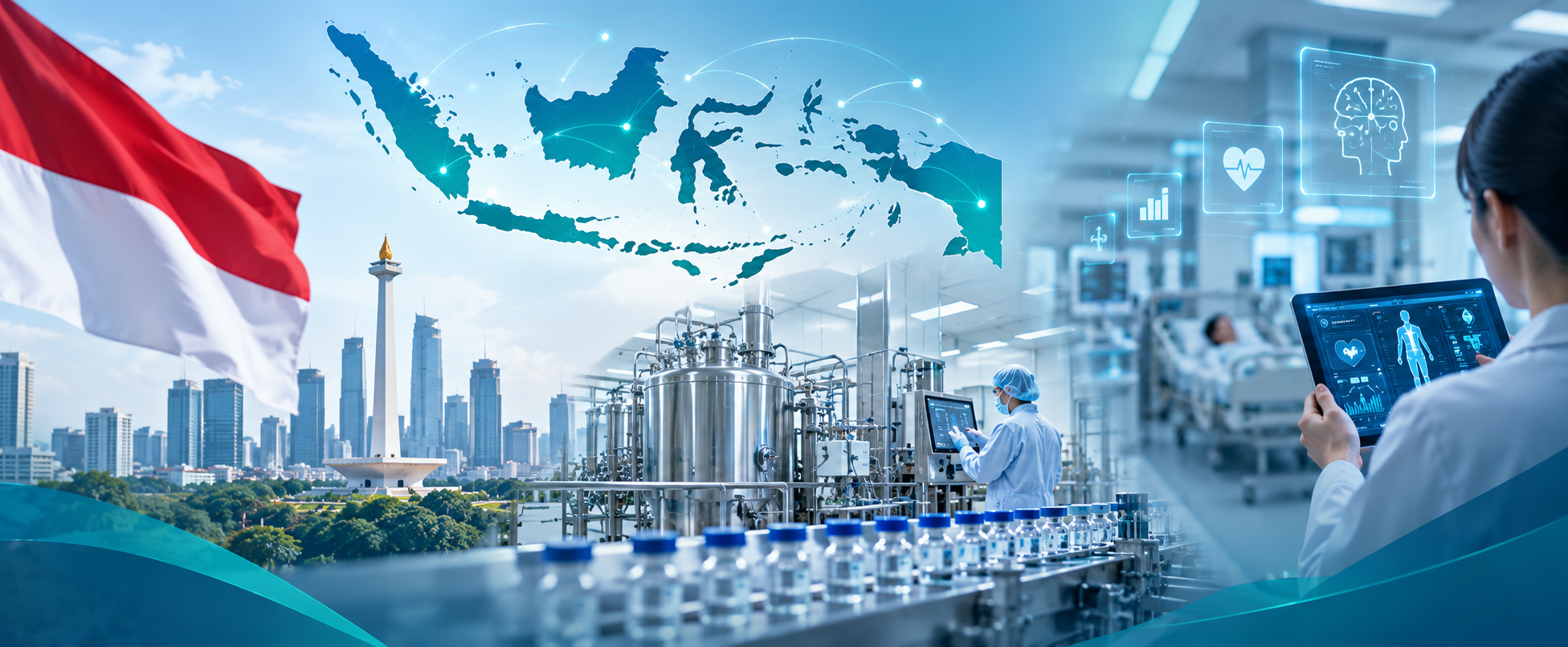
Indonesia’s Healthcare Transformation
Indonesia’s healthcare sector is entering a significant period of transformation.
Government investment, growing international partnerships and new technology adoption are reshaping different parts of the healthcare ecosystem — from frontline community health facilities to biopharma, digital health and regulation.
Rather than one single development driving this change, four key areas are beginning to move together.
Primary Healthcare Infrastructure: 10,000 Puskesmas Set for Upgrades
One of the most significant developments is Indonesia’s plan to renovate 10,000 Community Health Centres (Puskesmas) starting in 2027, with approximately Rp4 billion allocated for upgrades to each facility.
Puskesmas form an important part of Indonesia’s primary healthcare network, providing essential healthcare services to communities across the country.
The scale of the planned upgrades could therefore create opportunities beyond construction and physical infrastructure. As facilities modernise, demand could also grow for medical equipment, diagnostics, laboratory technologies, healthcare IT, automation and connected healthcare solutions.
For technology and healthcare solution providers, the opportunity may increasingly be about what goes inside the next generation of Puskesmas.
Biopharma: Building Greater Domestic Capabilities
Indonesia is also taking steps to strengthen its domestic biopharmaceutical ecosystem.
Takeda has secured a plasma fractionation licence from Indonesia’s Ministry of Health, supporting efforts to develop the country's plasma ecosystem and improve access to plasma-derived medicinal products.
The development reflects a broader regional trend as Asian markets look to strengthen domestic capabilities across strategically important areas of healthcare and pharmaceutical manufacturing.
For Indonesia, building greater local expertise could support not only access to essential therapies, but also technology transfer, specialised manufacturing capabilities, workforce development and international collaboration.
Digital Health: AI and Connected Healthcare Gain Momentum
Indonesia’s healthcare transformation is becoming increasingly digital as well.
Hong Kong-based Orbiva has partnered with PT Articura Tech Indonesia to advance AI-enabled smart healthcare devices, health-data processing and digital health technologies within Indonesia.
This becomes particularly interesting when viewed alongside the planned modernisation of thousands of community healthcare facilities.
Upgrading healthcare infrastructure creates an opportunity to introduce connected medical devices, digital diagnostics, remote monitoring, AI-supported workflows and integrated healthcare data systems closer to the point of care.
Indonesia’s healthcare transformation may therefore be about more than building better facilities — it could also be about creating a smarter and more connected healthcare network.
Regulation: Greater Cooperation Across Southeast Asia
Healthcare innovation also requires regulatory systems capable of keeping pace with new technologies and increasingly interconnected regional markets.
Indonesia’s Food and Drug Authority (BPOM) and Singapore’s Health Sciences Authority (HSA) have strengthened regulatory cooperation following both authorities achieving WHO Listed Authority status.
The cooperation covers areas related to the safety, quality and regulation of medicines and health products, supporting greater knowledge sharing between two important Southeast Asian healthcare markets.
As new therapies, medical technologies and digital solutions enter the region, stronger regulatory cooperation could become increasingly important in supporting quality, patient safety and more effective regional collaboration.
What Does This Mean for Indonesia’s Healthcare Market?
What makes these developments significant is not any single announcement — but how they connect.
Infrastructure is being upgraded. Biopharma capabilities are being strengthened. Digital technologies are entering healthcare delivery. Regulatory cooperation is deepening.
Together, these developments point towards a healthcare market that is becoming more sophisticated and increasingly connected across the value chain.
For healthcare providers, technology companies, medical device manufacturers, pharmaceutical and biopharma organisations, this evolution could create new opportunities to participate in Indonesia’s next phase of healthcare development.
Connexius Key Takeaway
Indonesia’s healthcare transformation is moving across four fronts — infrastructure, biopharma, digital health and regulation.
The next chapter will increasingly be about how these areas come together to create a more connected, technology-enabled and resilient healthcare ecosystem.